How to Take Smart Notes
How to Take Smart Notes
— Sönke Ahrens
Key ideas on thinking, writing, note-taking, and the hidden traps of the human mind.
Willpower & Environment
One of the most counterintuitive insights from modern psychology: willpower is a limited, depleting resource — and it’s not something we can reliably strengthen. The real lever is the environment around us.
“Not having willpower, but not having to use willpower — that indicates you set yourself up for success.”
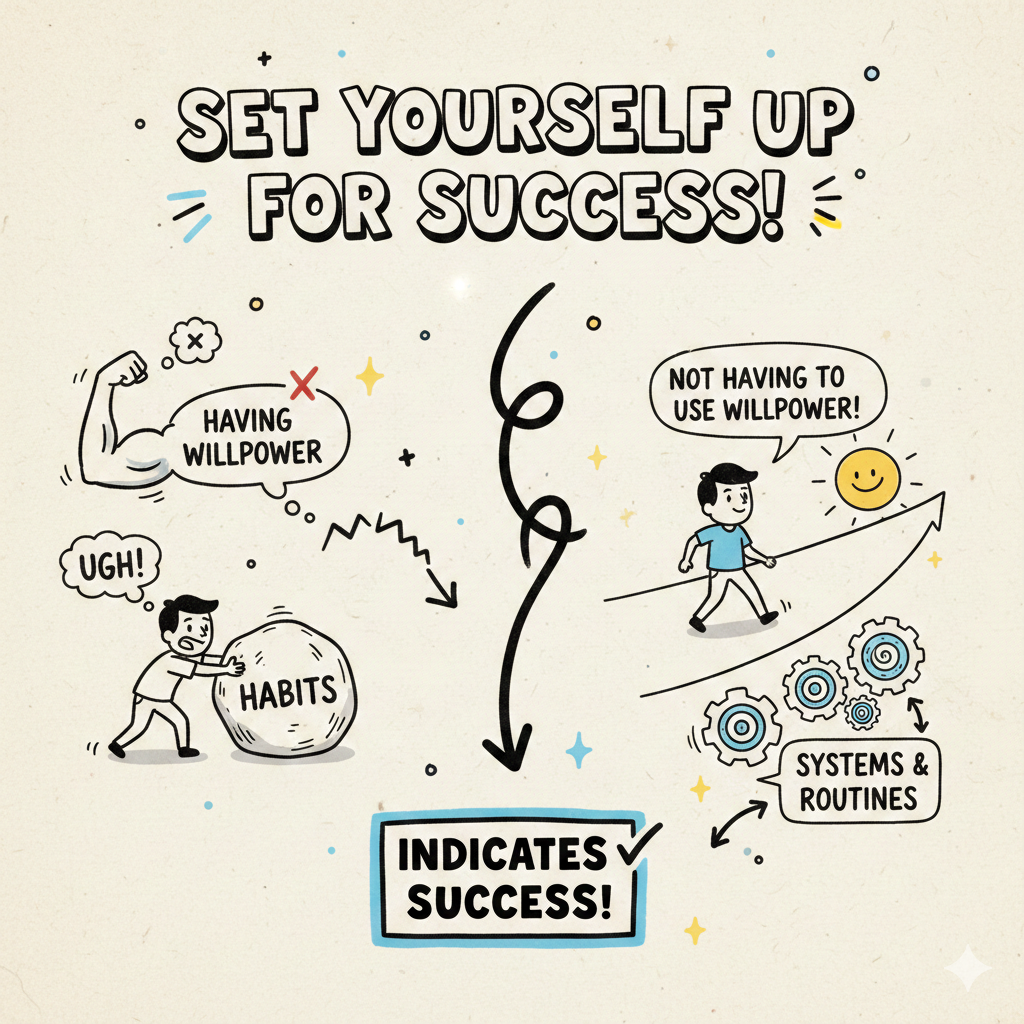
“Willpower is, as far as we know today, a limited resource that depletes quickly and is also not that much up for improvement over the long term.”
“Self-control and self-discipline have much more to do with our environment than with ourselves — and the environment can be changed.”
“The more control we have to steer our work towards what we consider interesting and relevant, the less willpower we have to put into getting things done.”
The Problem with Plans
“If you make a plan, you impose a structure on yourself; it makes you inflexible. To keep going according to plan, you have to push yourself and employ willpower.”
Note-Taking & The Slip-Box System
The Zettelkasten method builds knowledge organically rather than through rigid planning. Central to it is the distinction between different types of notes — and what makes a note actually useful.
Types of Notes
“Fleeting notes are only useful if you review them within a day or so and turn them into proper notes you can use later.”
“No underlined sentence will ever present itself when you need it in the development of an argument. Permanent notes, on the other hand, are written in a way that can still be understood even when you have forgotten the context they are taken from.”
The Writing Process, Step by Step
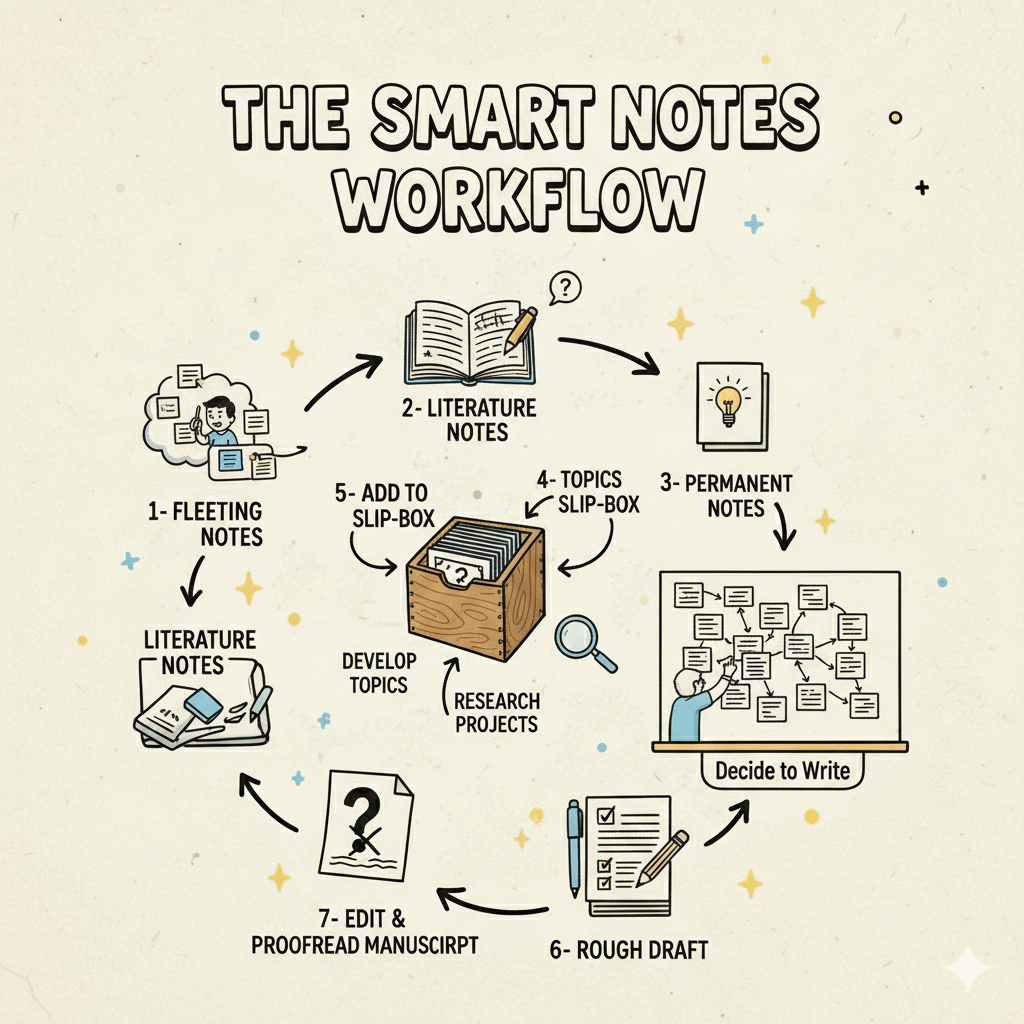
- Make fleeting notes — capture ideas as they come, without pressure.
- Make literature notes — in your own words, while reading.
- Make permanent notes — refined, standalone insights for the slip-box.
- Add permanent notes to the slip-box. Develop topics bottom-up. See what is there, what is missing, and what questions arise.
- Decide on a topic to write about — let it emerge from the system.
- Turn your notes into a rough draft.
- Detect holes in your argument — fill them or change your argument.
- Edit and proofread your manuscript.
“The idea is not to copy, but to have a meaningful dialogue with the texts we read.”
“Handwriting makes pure copying impossible, but instead facilitates the translation of what is said into one’s own words.”
Writing & Thinking
Writing isn’t just how we record thinking — it is thinking. Treating it as an output rather than a process is one of the most common and costly mistakes in knowledge work.
“If you want to really understand something, you have to translate it into your own words. Thinking takes place as much on paper as in your own head.”
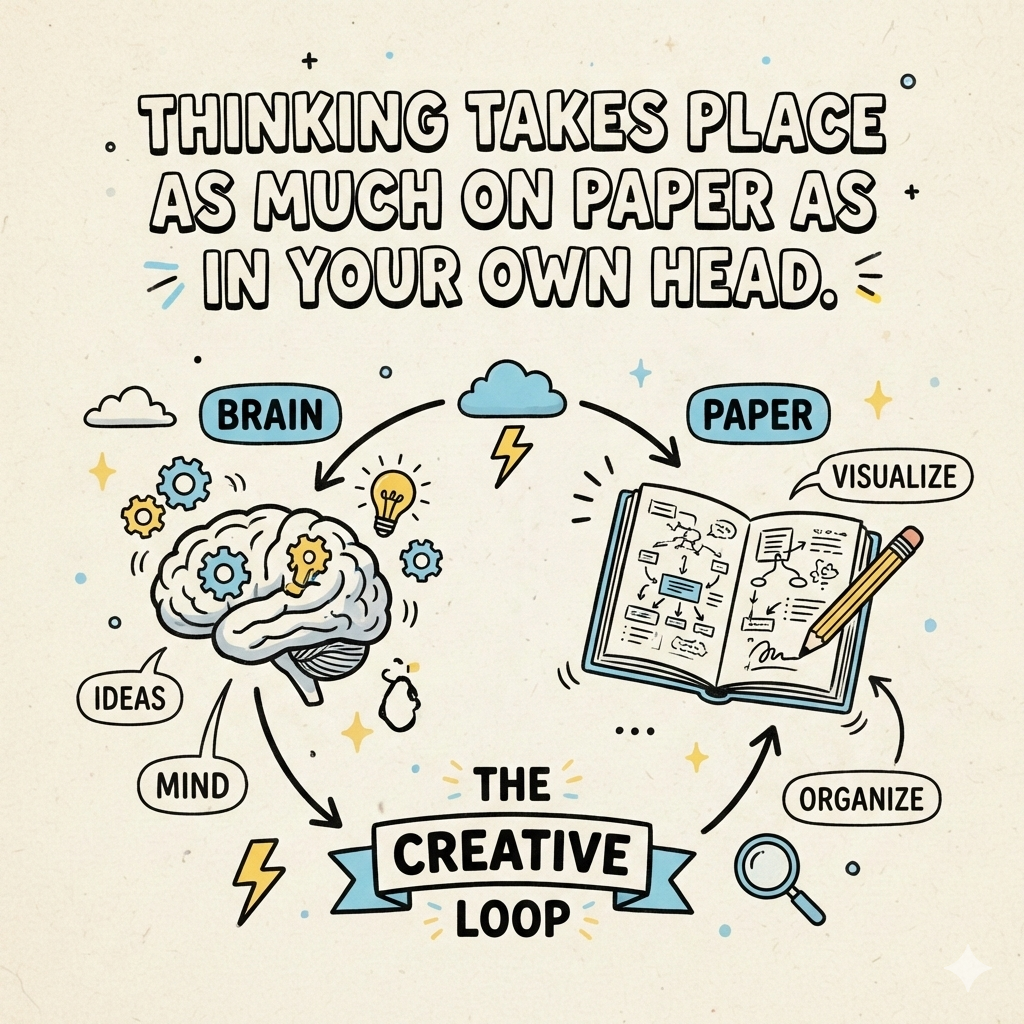
“Our brains tend to stay occupied with a task until it is accomplished — or written down.”
“It is now about narrowing the perspective, making a decision on one topic only and cutting out everything that does not directly contribute to the development of the text and support the main argument.”
“‘Kill your darlings.’ This becomes much easier when you move the questionable passages into another document and tell yourself you might use them later.”
Understanding vs. Familiarity
One of the most quietly damaging cognitive errors: mistaking recognition for comprehension. The warm feeling of familiarity fools us into thinking we’ve mastered something we’ve merely encountered.
“We unfortunately tend to confuse familiarity with skill.”
“The moment we become familiar with something, we start believing we also understand it.”
“If we don’t try to verify our understanding during our studies, we will happily enjoy the feeling of getting smarter and more knowledgeable while in reality staying as dumb as we were. This warm feeling disappears quickly when we try to explain what we read in our own words.”
“We have to translate ideas into our own language to prepare them to be embedded into new contexts of our own thinking.”
Cognitive Biases & Perception
Our brains are optimized for efficiency, not accuracy. That means we constantly filter, reinterpret, and distort reality to fit existing mental models — often without noticing.
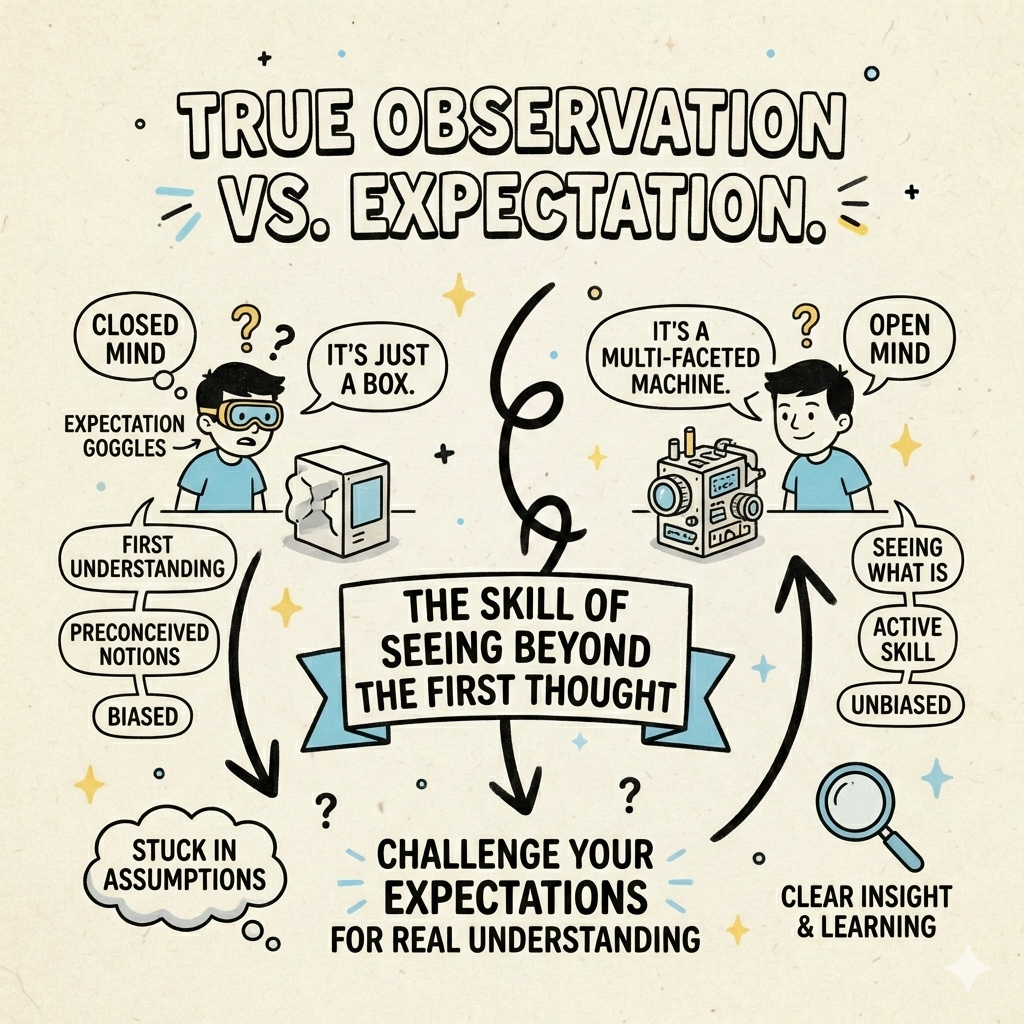
“Our brains just love routines. Before new information prompts our brains to think differently about something, they make the new information fit into the known — or let it disappear completely from our perception.”
“Our perception does not follow the order of seeing first and interpreting second. It does both at the same time: We always perceive something as something — our interpretation is instantaneous.”
“Those who think of themselves as open-minded are often even more prone to stick to their first understanding, as they believe themselves to be without natural prejudices and therefore don’t see the need to counterbalance them.”
Confirmation Bias
“We are naturally drawn to everything that makes us feel good, which is everything that confirms what we already believe we know.”
“We just seem to happen to be surrounded by people who all think alike. Not on purpose, of course. We just spend our time with people we like. And why do we like them? Correct: Because they think like us.”
Abraham Wald & Survivorship Bias
Kant on Intellectual Courage
“Nonage [immaturity] is the inability to use one’s own understanding without another’s guidance. Dare to know! ‘Have the courage to use your own understanding,’ is therefore the motto of the Enlightenment.”
— Immanuel Kant, 1784
Creativity & Problem Solving
Creativity isn’t a mysterious gift — it’s a learnable mode of thinking that requires moving between open and focused states of mind, and often reframing the problem rather than forcing a direct solution.
“The key to creativity is being able to switch between a wide-open, playful mind and a narrow analytical frame.”
“Problems rarely get solved directly, anyway. Most often, the crucial step forward is to redefine the problem in such a way that an already existing solution can be employed.”
“Good questions are in the sweet spot of being relevant and interesting, not too easy to answer but possible to tackle with material that is available or at least within our reach.”
Motivation & Deliberate Practice
Sustainable motivation doesn’t come from discipline alone — it emerges when the work itself becomes rewarding. Pair that with deliberate, intentional practice and you have a self-reinforcing loop.
“Only if the work itself becomes rewarding can the dynamic of motivation and reward become self-sustainable and propel the whole process forward.”
“Deliberate practice is the only serious way of becoming better at what we are doing.”


About The Author

