The Illicit Happiness of Other People
The Illicit Happiness of Other People
— Manu Joseph
Unsettling ideas on delusion, truth, nature, happiness, and the quiet tragedy of ordinary life.
Delusion, Truth & Contagion
One of the book’s most persistent ideas: delusion is not a weakness or an accident. It is a feature — contagious, self-sustaining, and far more powerful than truth. Truth, by contrast, is incommunicable. It cannot travel.
“The fundamental quality of a delusion is that it is contagious. The very purpose of every delusion is to transmit itself to other brains. That is how a delusion survives. On the other hand, truth can never be transmitted, truth can never travel from one brain to another. Movement is a quality of delusion alone.”
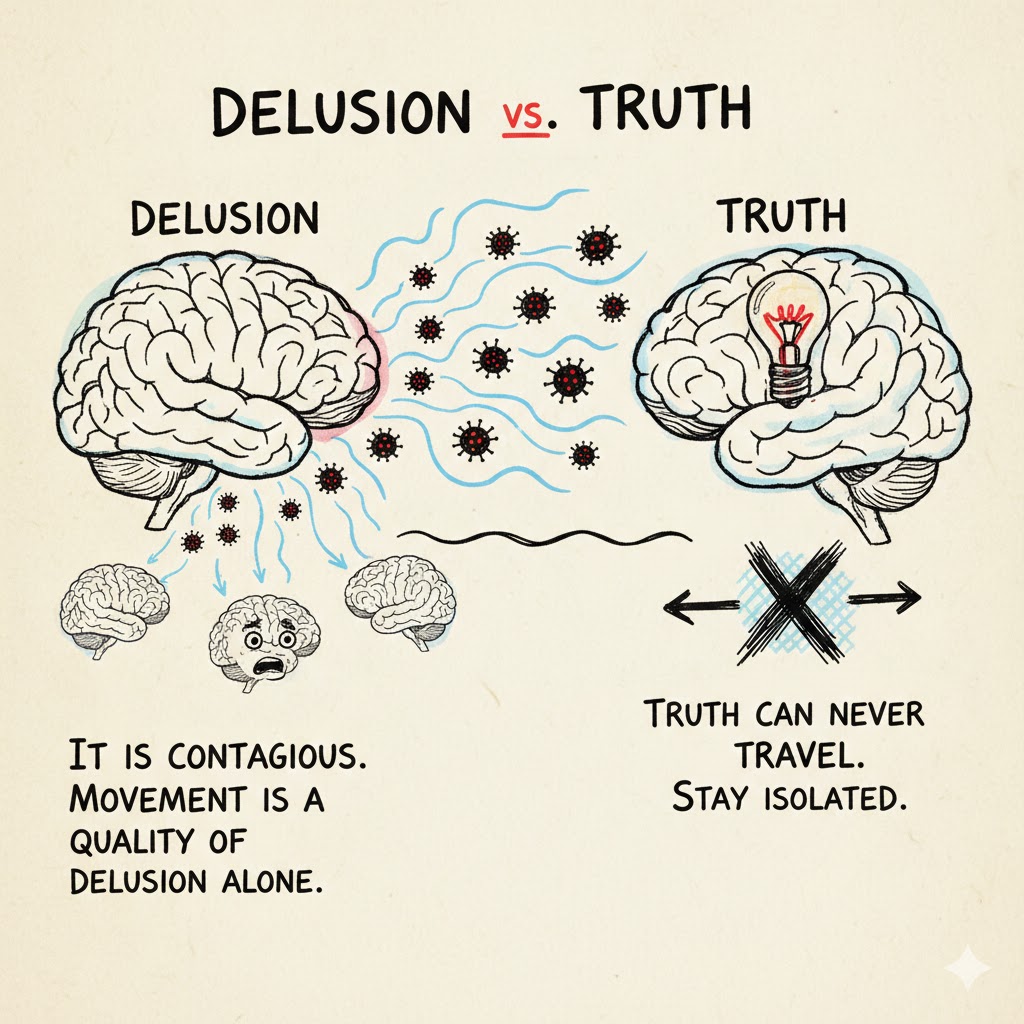
“A delusion is many times more powerful than a lie. The distinction between a delusion and a lie is the very difference between a successful saint and a fraud.”
“To fool a person, it appears, you have to first fool yourself. That is at the heart of all human influences.”
“According to Unni, any philosophy that can be transmitted to another person is a delusion. If two people believe in the same idea of truth, it is a delusion.”
The Folly of Two
Nature, The Brain & Its Hidden Purpose
A disturbing theory runs through the book: that nature is not on our side. Its purpose is not to enlighten but to prevent enlightenment — to produce beings capable of surviving, not seeing.
“When you begin to see the world more clearly, what you first contradict are the very ideas that were once dear to you.”
“The very purpose of nature, the evolutions it has managed through the vast ages, is to prevent a particular kind of neurological condition. It is as if the system of life is a devious force that does not want any organism to look too deep.”
“Nature creates a huge quantity of life so that, through trial and error, through the extinction and the evolution of billions of lumps of flesh over a vast period of time, it will finally attain its goal — a particular kind of neurological system.”
“The birth of every human is nature’s blind shot at achieving something grander. It constantly fails but by producing billions of people nature is improving its chances of attaining a mysterious goal.”
The Syndicate of Life
“When you see reality you will not want to be a part of the syndicate of life. The purpose of the syndicate is to sustain itself, to exist forever in the minds of its organisms. Therefore, from the beginning of conscience, it has eliminated any neurological network that has the potential to see nature in its true form — by rewarding species that are delusional and by terminating those that are awakened.”
Language, Reality & The Senses
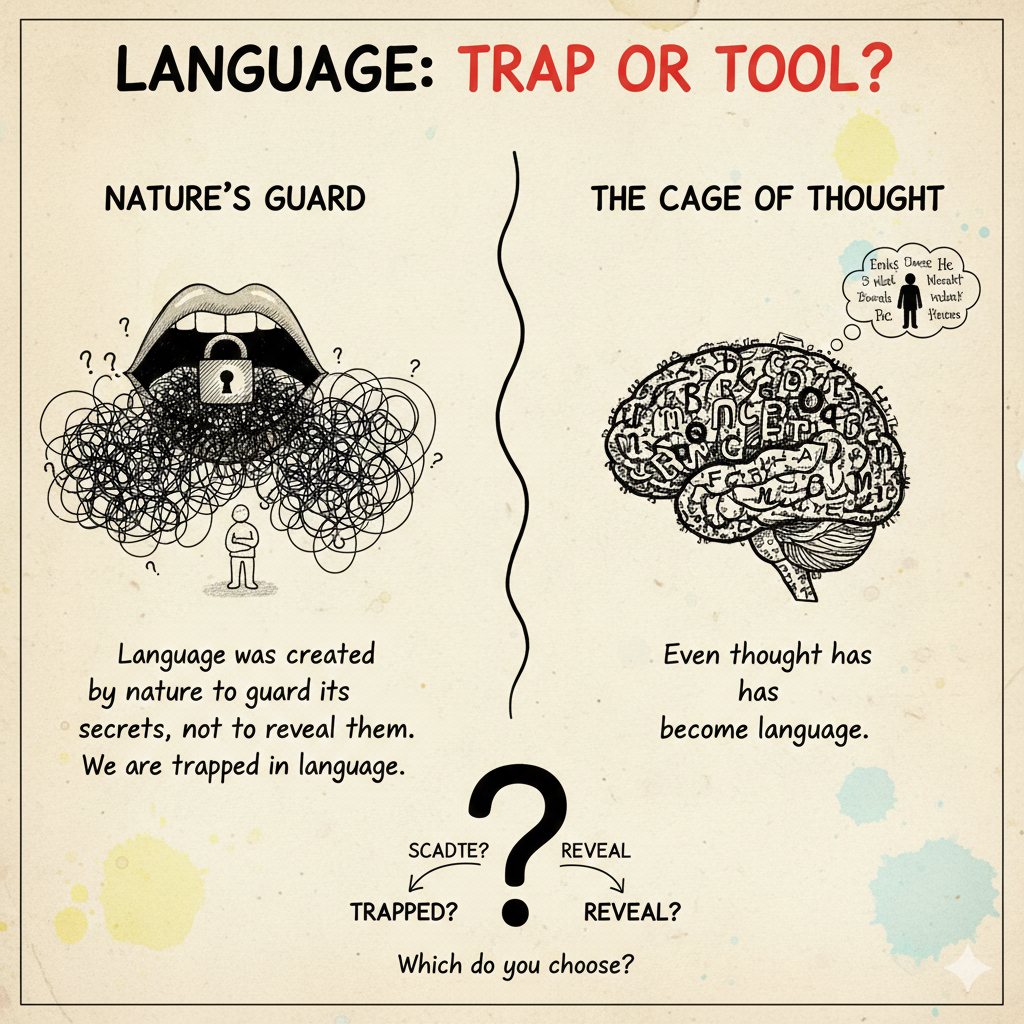
If nature wants to keep its secrets, language is one of its most effective tools — not a means of revelation but a means of concealment. Even thought, the book suggests, has been captured by it.
“Language was created by nature to guard its secrets, not to reveal them. We are trapped in language. Even thought has become language. That is what nature wants.”
“The world is a charade created by a combination of senses.”
“If the world is the myth of the senses, there is something pointless about all arts. Whom will you read, what will you write, what music will you listen to, what can move you, what can you adore when nothing is true?”
Experience vs Philosophy
“When you do not experience but accept a phenomenon, it is philosophy, which is a form of religion. But when you experience it, it is different. An experience is a plain fact, experience is truth.”
God-men, Saints & Self-Deception
The book makes a sharp distinction between frauds and true believers — and argues that the most dangerous influencers are never consciously lying.
“Rationalists think all god-men are frauds. That is the problem with rationalists. They are not rational enough. The world cannot be conned so easily by frauds. Great god-men are great because they really believe they are holy.”
Good, Evil & The Great Illusion
“Thousands of years ago, a great darkness fell. The war between good and evil has ended. And it has ended with the complete triumph of evil and a total, irrevocable extermination of good. Evil is cunning — it quickly splits itself into two, into apparent good and evil, so that mankind is under the delusion that the great conflict is still raging and it will not go in search of the truth.”
Ordinary Life & Quiet Happiness
Perhaps the most tender strand of the book — an unsentimental but compassionate look at ordinary people who live small lives, feel small joys, and are more at peace than anyone gives them credit for.
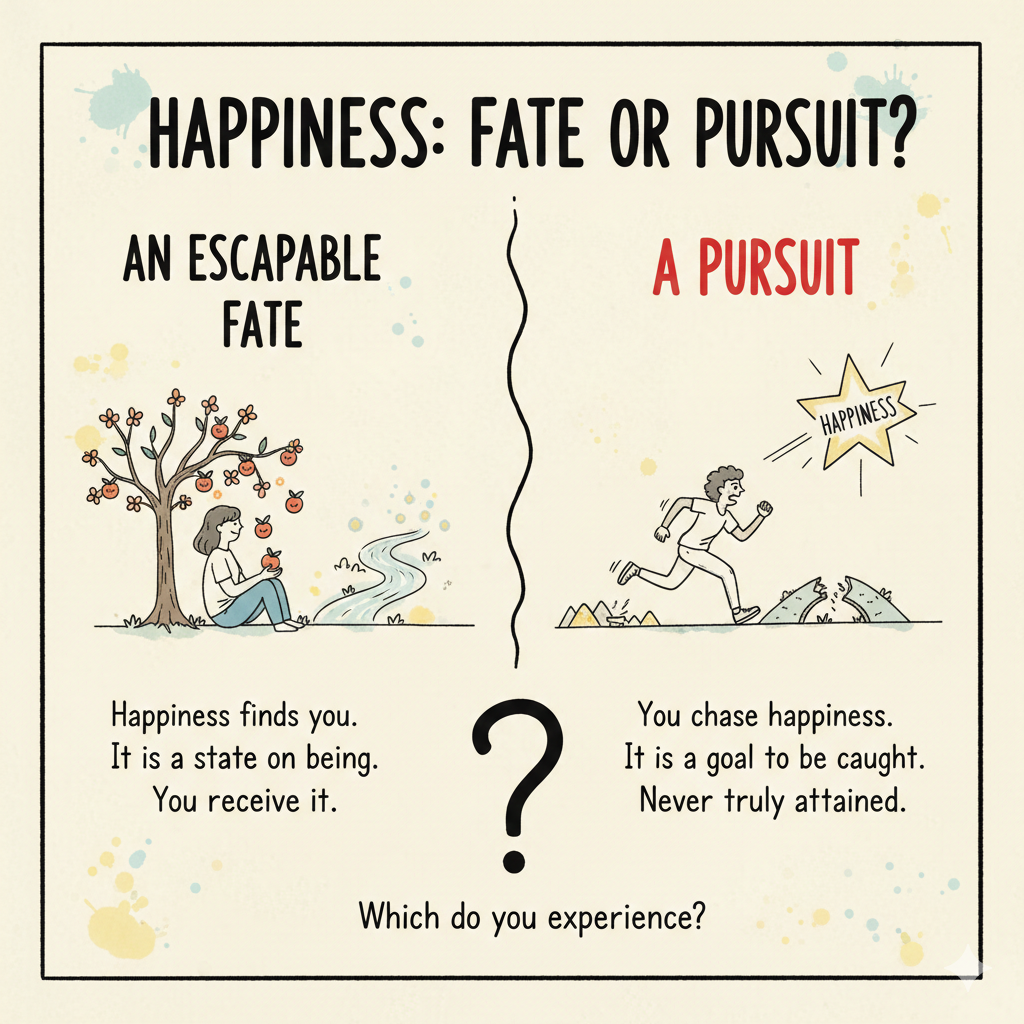
“In this world, it is very hard to escape happiness. That’s how it is.”
“The unfortunate are not as miserable as the world imagines. Urchins, the handicapped, orphans, prisoners and others are much happier than people think.”
“He decayed in a state of gentle happiness.”
“He is even happy, and somewhat ashamed of his ordinary everyday happiness, as if fathers of dead sons do not have that crass right.”
“He does not know why he lives but he lives, and he lives because he does not know why he must die. He will go on this way, doing his little things, enjoying the little victories, adopting morals invented by other people, secretly supporting the ideologies of third-rate men and, at dinner time, quoting the philosophies of the extraordinary whom people like him have never allowed to live in peace.”
Human Nature & The Self
Sharp, often unkind observations about how people relate to each other, to their own flaws, and to the choice between authenticity and comfort.
“The primary choice every man has to make is whether he wants to be himself or if he wants peace.”

“What men find most endearing in other men are their tragic flaws. That is why alcoholics never run out of friends.”
“She is only a subject of their compassion, which is a cowardly form of self-congratulation.”
“The fate of shy people is that all their fears usually come true.”
“The regular people, they are usually right, aren’t they? They know the ways of the world better because they are the world.”
On Creativity & Expression
“Strong people write bad stories.”
“Subtlety is not always a mask of mediocrity.”
Related Posts


About The Author

